Sunday, January 22, 2012


Saturday, January 21, 2012
John Mann at the Victoria House Concert B: Venice is Sinking - YouTube
Another video from the concert we saw last weekend. His story about how "Venice is Sinking" song came about is hilarious! Well worth the listen...enjoy!
Thursday, January 19, 2012
Microsoft Girds Itself For Windows 8 Battle And Beyond | TechCrunch
The next year will show Microsoft positioning itself for major product synthesis. The post-PC era isn’t here, as some people are fond of suggesting, but it is coming, and Microsoft wants to guarantee itself a part in it. Not an easy task for the company that pioneered the PC era. They almost seem obsolete by definition — but the straitlaced Microsoft has been loosening up ever since Vista, and they might just have learned enough to ride this next wave without washing out.
Microsoft cannot make any missteps in order for this strategy to work. They are behind the 8-ball but they still have a chance to make an impact.
Monday, January 16, 2012
John Mann - Home For a Rest - YouTube
What an amazing night!! The singular best way to see an artist that you like.....in someone's living room. I took this video with my iPhone....John played two sets with the total concert being over 2.5 hrs. Even better the house was in walking distance of our house (of course only in Fernwood).
Sunday, January 15, 2012
OK, MG, I Take It Back | TechCrunch
OS fragmentation, though, is an utter disaster. Ice Cream Sandwich is by all accounts very nice; but what good does that do app developers, when according to Google’s own stats, 30% of all Android devices are still running an OS that is 20 months old? I sure would have liked to stop caring about Android 2.2 bugs fixed in 2.3. It would have been awfully nice to be able to use the animation libraries from Android 3.0, described in this almost-a-year-old blog post, to say nothing of Ice Cream Sandwich’s features; but at this rate, Android developers aiming for a mass audience will have to wait another year, if not longer, before they can actually build apps that take advantage of all the shiny new features.
This really sheds some light on the differences in the platform. It remains to be seen whether this will really hold back the Android market.....there is so much momentum that app developers cannot afford to ignore the platform regardless of how difficult it is for them to provide backwards compatibility for all the versions of the OS.


Thursday, January 12, 2012
Terapeak Appoints Chief Revenue Officer
Terapeak, the leading provider of e-commerce research and payment analytics, is pleased to announce the appointment of Scott Crawford to the role of Chief Revenue Officer. Mr. Crawford joins Terapeak from Boomi (acquired by Dell) and Ascential Software (acquired by IBM).
My new boss ;-)
Sunday, January 08, 2012
Want A Great Team? Focus On Talent, Not Hiring | TechCrunch
One of the questions most founders always ask is about the key secrets to hiring. What they need to understand is that there’s a big difference between “hiring” and “talent”.
Great article on talent and hiring.


Wednesday, January 04, 2012
CrunchBase Reveals: The Average Successful Startup Raises $25.3 Million, Sells For $196.8 Million | TechCrunch

Most investments fail but the few successful ones more than make all the money back — or so startup investors hope. But what sort of returns do these profitable exits bring in? According to a new analysis of all the exits listed in CrunchBase, the average successful company has raised $25.3 million, and sold for $196.8 million, for investor profits of 676% (if you assume the investors own 100% of the company, which they normally don’t).
Meanwhile, IPO-bound companies generated lower percentage returns, but made a lot more money per exit. The average one raised $580.3 million while private, then went public with a market cap of $2.3 billion on its first day of public trading for 303% profit on investment (yes, investors probably aren’t selling all their stock on the first day, this is just one way to measure IPO exits). Mouse over the dots below for more details.
The analysis, done by Belarus-based engineer and TechCrunch reader Alexey Tolkachiov with help from his brother Anton, looked at all CrunchBase-listed companies that had exits over the last five, and are ten years old or younger. So, these stats (which you can also find on their data analysis site, BuzzSparks) are squarely focused on the modern startup world. And that’s not the only qualifier here. As readers should note whenever we cover CrunchBase data, some company information it contains may be incomplete or inaccurate, even if it’s the largest free source for startup information in the world.
Anyway, the analysis has also uncovered some other surprising trends in recent startup returns.
Exit prices fluctuate over the course of a company’s life before it exits — but they don’t trend upwards the older the company is, overall. Peak ages seem to be 1.5 years and 7.5 years in, for whatever reason. This data suggests that selling early could save you some time making money
….The acquisition price per employee appears to peak when companies are a little less than two years old, or four and a half years old, or a little over five years old. My guess is that a few extra lucrative deals are throwing things off here.


Nobody Understands Debt - NYTimes.com
But Washington isn’t just confused about the short run; it’s also confused about the long run. For while debt can be a problem, the way our politicians and pundits think about debt is all wrong, and exaggerates the problem’s size.
Deficit-worriers portray a future in which we’re impoverished by the need to pay back money we’ve been borrowing. They see America as being like a family that took out too large a mortgage, and will have a hard time making the monthly payments.
This is, however, a really bad analogy in at least two ways.
First, families have to pay back their debt. Governments don’t — all they need to do is ensure that debt grows more slowly than their tax base. The debt from World War II was never repaid; it just became increasingly irrelevant as the U.S. economy grew, and with it the income subject to taxation.
Second — and this is the point almost nobody seems to get — an over-borrowed family owes money to someone else; U.S. debt is, to a large extent, money we owe to ourselves.
Monday, January 02, 2012
Chart: How Google And Apple Won The Smartphone Wars | TechCrunch
What a difference just one year can make. In our Year in Tech post, I pointed out that 2011 was the year that Apple and Google won the smartphone wars. I put together the chart above from comScore U.S. mobile subscriber estimates to illustrate the dramatic shift in market share in the smartphone market. In less than 18 months, Apple’s and Google’s combined market share of U.S. mobile subscribers for iPhones and Android phones went from 43.8 percent to 75.6 percent between August, 2010 and November, 2011.
What have you done | TechCrunch
How audacious it was to overturn our love/hate relationship with computers. The first clue was the sofa in the middle of the stage at the iPad introduction. Here was the man who perfected the computer as art form invading the center of the television’s turf. Disrupting the click of the mouse with the insouciant swipe of the hand. Enough of this, what else? Replacing the linear steps of navigating to and from documents with Siri and her guidance. Is this who you mean?
None of these ideas are new. Jobs was not spending his time on incremental improvement. He was choosing his battles and fighting the next war before others could marginalize the opportunity. He viewed each decision, each choice, as requiring his and our best effort at seizing the day while we still had the light. In that pact, we were no more the audience than he was the inventor. We were collaborators in transforming ourselves to the people we thought we could be.
Tuesday, December 27, 2011
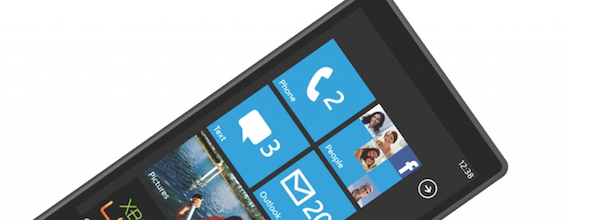
parislemon • The Windows Phone Problem In Three Words: Way Too Late.
The Windows Phone Problem In Three Words: Way Too Late.
Earlier today, Charlie Kindel, a former Windows Phone GM, posted some thoughts on why Windows Phone hasn’t taken off. Essentially, he blames Microsoft’s model pressuring both OEMs and carriers — so much so that neither really wants to push the platform.
Perhaps not surprisingly, I largely agree with his criticisms of Android. He believes Google’s platform has completely laid down for both the OEMs and the carriers to the detriment of the users (hence, the fragmentation we continue to see). This has allowed Android to flourish with regard to market share, but he thinks it won’t last forever because eventually the consumers will revolt, just as they did against Windows Mobile.
I agree.
Where I don’t agree with him is that Windows Phone is the correct model. I like the model a lot more than Android’s, and I like the OS a lot. But I don’t like the OEM strategy. And I hate the timing.
The new Nokia Windows Phone device looks nice (though I haven’t personally used it yet), but the others I’ve seen are largely the same crap that Android phones run on. The iPhone blows these phones out of the water.
Kindel believes Apple’s strategy (of making the devices themselves and bending the carriers to their will this way) will eventually backfire. But he declines to elaborate as to why he believes this (he says it will be a different post).
All of this is very interesting to think about. But I think Kindel is silly to overlook a couple key things.
First, Apple’s initial model, while frustrating, was actually quite smart. They partnered with one carrier to ensure they got the terms they wanted. And rode this until other customers demanding the iPhone hit a fever pitch. At this point, the other carriers (in the U.S. at least) had to accept to play ball with Apple on their own terms.
Apple could afford to do this because they knew their device — their complete device: OS and hardware — was that good.
But Apple could also afford to do this because they were first to market. When the iPhone launched in 2007, the other smartphones on the market were shit. There was no actual competition for the iPhone. The first Android phones that launched over a year later were a joke.
Contrast that with Windows Phone which launched far too late into the market. Kindel never mentions it, but you simply can’t downplay that fact. Had Windows Phone launched in 2007 or even 2008, the story would have been different. Instead, it launched in late 2010.
Way too late.
Two to three years in the hole, the only way Windows Phone can win the market now is to make a product that is leaps and bounds better than what’s out there. They need something that’s an iPhone-in-2007 type product. The product they have, while good, isn’t that.
It’s not enough to be better. (And we can argue as to whether iOS or Android or Windows Phone is better.) You need to present a product so good that people have to buy it. Windows Phone isn’t close to being that. I’m sorry, but it’s just not.
And one other big reason for that is something else Kindel oddly downplays: apps. Even if you think Windows Phone is better than iOS or Android right now, you’re unlikely to buy it because all of your favorite apps are available on those competing platforms and very few are available for Windows Phone.
Microsoft has been pushing hard to change this, offering third-party developers bags of cash to port their apps to Windows Phone. But for most developers, the money isn’t enough. The users just aren’t there. It’s very much a chicken-and-egg problem.
I just think the main Windows Phone problem is a lot more simple than Kindel wants to believe. He blames carrier marketing — yadda, yadda. Microsoft has all the money in the world; if it was just a marketing problem, they could fix that.
He also thinks it’s almost a conspiracy theory to ensure the Android model — which is favorable to carriers and OEMs — wins out. To some extent, I have no doubt this is true. If I was a carrier or OEM, Android would be my best friend. But Windows Phone availability in 2008 may have altered this.
You can’t overlook being two to three years late to the market. And as a result, having essentially no third-party developer support. This does matter.
So what can Windows Phone do? I don’t know. But I’d consider betting it all on the Xbox Live integration. Or I’d go back to the drawing board and come up with something completely different to blow the market away. I’d invent the iPhone in a world of RAZRs all over again. Small task, I know.