Sunday, January 15, 2012

OK, MG, I Take It Back | TechCrunch

OS fragmentation, though, is an utter disaster. Ice Cream Sandwich is by all accounts very nice; but what good does that do app developers, when according to Google’s own stats, 30% of all Android devices are still running an OS that is 20 months old? I sure would have liked to stop caring about Android 2.2 bugs fixed in 2.3. It would have been awfully nice to be able to use the animation libraries from Android 3.0, described in this almost-a-year-old blog post, to say nothing of Ice Cream Sandwich’s features; but at this rate, Android developers aiming for a mass audience will have to wait another year, if not longer, before they can actually build apps that take advantage of all the shiny new features.

This really sheds some light on the differences in the platform. It remains to be seen whether this will really hold back the Android market.....there is so much momentum that app developers cannot afford to ignore the platform regardless of how difficult it is for them to provide backwards compatibility for all the versions of the OS.

Posted via email from papafouche's posterous

First Snow!!

Thursday, January 12, 2012

Terapeak Appoints Chief Revenue Officer

Terapeak, the leading provider of e-commerce research and payment analytics, is pleased to announce the appointment of Scott Crawford to the role of Chief Revenue Officer. Mr. Crawford joins Terapeak from Boomi (acquired by Dell) and Ascential Software (acquired by IBM).

My new boss ;-)

Posted via email from papafouche's posterous

Wednesday, January 04, 2012

CrunchBase Reveals: The Average Successful Startup Raises $25.3 Million, Sells For $196.8 Million | TechCrunch

Screen Shot 2012-01-03 at 7.08.34 PM

Most investments fail but the few successful ones more than make all the money back — or so startup investors hope. But what sort of returns do these profitable exits bring in? According to a new analysis of all the exits listed in CrunchBase, the average successful company has raised $25.3 million, and sold for $196.8 million, for investor profits of 676% (if you assume the investors own 100% of the company, which they normally don’t).

Meanwhile, IPO-bound companies generated lower percentage returns, but made a lot more money per exit. The average one raised $580.3 million while private, then went public with a market cap of $2.3 billion on its first day of public trading for 303% profit on investment (yes, investors probably aren’t selling all their stock on the first day, this is just one way to measure IPO exits). Mouse over the dots below for more details.

The analysis, done by Belarus-based engineer and TechCrunch reader Alexey Tolkachiov with help from his brother Anton, looked at all CrunchBase-listed companies that had exits over the last five, and are ten years old or younger. So, these stats (which you can also find on their data analysis site, BuzzSparks) are squarely focused on the modern startup world. And that’s not the only qualifier here. As readers should note whenever we cover CrunchBase data, some company information it contains may be incomplete or inaccurate, even if it’s the largest free source for startup information in the world.

Anyway, the analysis has also uncovered some other surprising trends in recent startup returns.

Exit prices fluctuate over the course of a company’s life before it exits — but they don’t trend upwards the older the company is, overall. Peak ages seem to be 1.5 years and 7.5 years in, for whatever reason. This data suggests that selling early could save you some time making money

….The acquisition price per employee appears to peak when companies are a little less than two years old, or four and a half years old, or a little over five years old. My guess is that a few extra lucrative deals are throwing things off here.

Posted via email from papafouche's posterous

Nobody Understands Debt - NYTimes.com

But Washington isn’t just confused about the short run; it’s also confused about the long run. For while debt can be a problem, the way our politicians and pundits think about debt is all wrong, and exaggerates the problem’s size.

Deficit-worriers portray a future in which we’re impoverished by the need to pay back money we’ve been borrowing. They see America as being like a family that took out too large a mortgage, and will have a hard time making the monthly payments.

This is, however, a really bad analogy in at least two ways.

First, families have to pay back their debt. Governments don’t — all they need to do is ensure that debt grows more slowly than their tax base. The debt from World War II was never repaid; it just became increasingly irrelevant as the U.S. economy grew, and with it the income subject to taxation.

Second — and this is the point almost nobody seems to get — an over-borrowed family owes money to someone else; U.S. debt is, to a large extent, money we owe to ourselves.

Posted via email from papafouche's posterous

Monday, January 02, 2012

Chart: How Google And Apple Won The Smartphone Wars | TechCrunch

What a difference just one year can make. In our Year in Tech post, I pointed out that 2011 was the year that Apple and Google won the smartphone wars. I put together the chart above from comScore U.S. mobile subscriber estimates to illustrate the dramatic shift in market share in the smartphone market. In less than 18 months, Apple’s and Google’s combined market share of U.S. mobile subscribers for iPhones and Android phones went from 43.8 percent to 75.6 percent between August, 2010 and November, 2011.

Posted via email from papafouche's posterous

What have you done | TechCrunch

Steve Gilmour on Steve Jobs

How audacious it was to overturn our love/hate relationship with computers. The first clue was the sofa in the middle of the stage at the iPad introduction. Here was the man who perfected the computer as art form invading the center of the television’s turf. Disrupting the click of the mouse with the insouciant swipe of the hand. Enough of this, what else? Replacing the linear steps of navigating to and from documents with Siri and her guidance. Is this who you mean?

None of these ideas are new. Jobs was not spending his time on incremental improvement. He was choosing his battles and fighting the next war before others could marginalize the opportunity. He viewed each decision, each choice, as requiring his and our best effort at seizing the day while we still had the light. In that pact, we were no more the audience than he was the inventor. We were collaborators in transforming ourselves to the people we thought we could be.

Posted via email from papafouche's posterous

Tuesday, December 27, 2011

parislemon • The Windows Phone Problem In Three Words: Way Too Late.
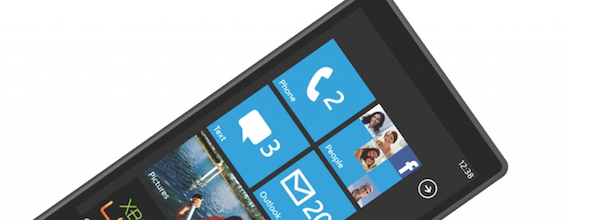
The Windows Phone Problem In Three Words: Way Too Late.

Earlier today, Charlie Kindel, a former Windows Phone GM, posted some thoughts on why Windows Phone hasn’t taken off. Essentially, he blames Microsoft’s model pressuring both OEMs and carriers — so much so that neither really wants to push the platform.

Perhaps not surprisingly, I largely agree with his criticisms of Android. He believes Google’s platform has completely laid down for both the OEMs and the carriers to the detriment of the users (hence, the fragmentation we continue to see). This has allowed Android to flourish with regard to market share, but he thinks it won’t last forever because eventually the consumers will revolt, just as they did against Windows Mobile.

I agree.

Where I don’t agree with him is that Windows Phone is the correct model. I like the model a lot more than Android’s, and I like the OS a lot. But I don’t like the OEM strategy. And I hate the timing.

The new Nokia Windows Phone device looks nice (though I haven’t personally used it yet), but the others I’ve seen are largely the same crap that Android phones run on. The iPhone blows these phones out of the water.

Kindel believes Apple’s strategy (of making the devices themselves and bending the carriers to their will this way) will eventually backfire. But he declines to elaborate as to why he believes this (he says it will be a different post).

All of this is very interesting to think about. But I think Kindel is silly to overlook a couple key things. 

First, Apple’s initial model, while frustrating, was actually quite smart. They partnered with one carrier to ensure they got the terms they wanted. And rode this until other customers demanding the iPhone hit a fever pitch. At this point, the other carriers (in the U.S. at least) had to accept to play ball with Apple on their own terms. 

Apple could afford to do this because they knew their device — their complete device: OS and hardware — was that good.

But Apple could also afford to do this because they were first to market. When the iPhone launched in 2007, the other smartphones on the market were shit. There was no actual competition for the iPhone. The first Android phones that launched over a year later were a joke. 

Contrast that with Windows Phone which launched far too late into the market. Kindel never mentions it, but you simply can’t downplay that fact. Had Windows Phone launched in 2007 or even 2008, the story would have been different. Instead, it launched in late 2010.

Way too late.

Two to three years in the hole, the only way Windows Phone can win the market now is to make a product that is leaps and bounds better than what’s out there. They need something that’s an iPhone-in-2007 type product. The product they have, while good, isn’t that.

It’s not enough to be better. (And we can argue as to whether iOS or Android or Windows Phone is better.) You need to present a product so good that people have to buy it. Windows Phone isn’t close to being that. I’m sorry, but it’s just not.

And one other big reason for that is something else Kindel oddly downplays: apps. Even if you think Windows Phone is better than iOS or Android right now, you’re unlikely to buy it because all of your favorite apps are available on those competing platforms and very few are available for Windows Phone. 

Microsoft has been pushing hard to change this, offering third-party developers bags of cash to port their apps to Windows Phone. But for most developers, the money isn’t enough. The users just aren’t there. It’s very much a chicken-and-egg problem. 

I just think the main Windows Phone problem is a lot more simple than Kindel wants to believe. He blames carrier marketing — yadda, yadda. Microsoft has all the money in the world; if it was just a marketing problem, they could fix that.

He also thinks it’s almost a conspiracy theory to ensure the Android model — which is favorable to carriers and OEMs — wins out. To some extent, I have no doubt this is true. If I was a carrier or OEM, Android would be my best friend. But Windows Phone availability in 2008 may have altered this.

You can’t overlook being two to three years late to the market. And as a result, having essentially no third-party developer support. This does matter. 

So what can Windows Phone do? I don’t know. But I’d consider betting it all on the Xbox Live integration. Or I’d go back to the drawing board and come up with something completely different to blow the market away. I’d invent the iPhone in a world of RAZRs all over again. Small task, I know.

Posted via email from papafouche's posterous

Monday, December 05, 2011

Schiedel-Foucher Family Christmas Photoshoot

Damn You Auto Correct Reveals 9 Funniest Texts of the Year

The auto-correct feature on mobile phones can be a blessing for catching text message typos but also a nightmare when a word is automatically replaced with an embarrassing one.

Popular blog Damn You Auto Correct — which features a collection of outrageous auto-corrected text messages submitted by readers — has unveiled its top laugh-out-loud entries of the year, based on Facebook shares, tweets, comments and page views.

Here’s a look at some of the most wild and blush-worthy texts that topped the list. Warning: Some of the content is not safe for work.

Damn You Auto Correct Reveals Funniest Typos of the Year

Previous 1 of 9 Next
View As One Page »

Posted via email from papafouche's posterous

Friday, December 02, 2011

HTML5 Smart Board Attempts To Out-Surface The Surface | TechCrunch

Intuilabs is showing off their proof-of-concept HTML5-based multi-touch smartboard in an effort to prove a) that HTML5 is pretty rocking and b) that someday we may all have smart tabletops in our home. To see the big screen in action you can fast forward to about 3 minutes in.

It’s obviously a little wonky in terms of applicability in the real world, but these guys aim to add multi-touch interfaces to the entire web, at least in some form. It will definitely be fascinating when web apps can do what native apps can do, especially when it comes to pinching, zooming, et al.

Introducing the Web as a multi-touch application hosting option opens the door to instant availability and universal access, giving retailers, advertisers and the like a powerful new medium for communicating with their prospects and customers. Web designers and their clients will be able to create immersive Web experiences without requiring plug-in downloads or excessive cross-browser scripting to ensure compatibility. Interactive mobile phone experiences could be ported to the Web, establishing a consistent look-and-feel, and then expanded to take advantage of additional screen real estate. Ambitious retailers, hospitality vendors and the like could take things a step further and carry over the phone and Web experience to their stores, lobbies and gathering places through interactive tablets, kiosks, tables and touchscreen walls.

Posted via email from papafouche's posterous

Thursday, December 01, 2011

The state of digital music (as I see it) | Jason Paul

Several months ago I wrote an essay about how I thought Netflix could save music. Since then I’ve become a big believer in subscription music services. I chose Rdio because I liked the design, the social aspect and lack of ads. I honestly don’t understand why anyone wouldn’t use a subscription music service (MOG, Spotify, Rhapsody, Rdio) instead of paying more and listening to less with iTunes. I’ve come down pretty hard on iTunes in essays and on Twitter. I fail see why we need it and how it’s good. In this so called ‘cloud’ age owning an mp3 has become redundant. While I’m skeptical of the cloud for personal data I think distributed media (music, movies) has found a perfect and profitable future in the cloud. Apple has introduced their version of cloud music called iCloud which will be released soon. My gut response is an immediate aversion. It seems better than the totally wasteful Google and Amazon cloud music offerings. The problem I foresee in iCloud is that it continues to coddle the antiquated consumer impulse to objectify music. While iTunes can claim they are helping artists earn money off of digital music it actually amounts to an enormous scam against both consumer and artist.

I am 100% for supporting the artist. To use iTunes as an argument for artist charity is delusional. An artist can sell directly on their website and collect 100% profit instead of paying the middleman. We are talking about the world wide web damnit. I’m more likely to buy when I know my money goes direct to the artist. With regards to subscription music I do see immense value for distribution. It’s interesting Apple won’t be jumping into music subscriptions as they are the most poised to popularise this very rational approach. But they won’t cannibalise their very expensive old-school approach to selling mp3s (in my opinion worthless collections of data).

Why I think Rdio’s social model is so important is because of the access it provides. It’s not just access to any impressively large library of music but it’s also access to a network of audiophiles interacting around common music tastes. Where Rdio is all about discovery iTunes leans more on traditional promotion. Discovery is much better for artists so their work can speak for itself. Most interestingly on Rdio I’ve noticed that really good indie music tends to hold its own against pop juggernauts and in many cases does better. This could be a reflexion on the Rdio user base.

Music in a social network has other important implications. Many Twitter users seem to be aiming for and a few have actually attained a kind of social capital (influence). In a music social network gaining this kind of influence is actually more straightforward and less self-serving. The goal simply being to find great music from like-minded listeners. At least that’s why I’m hooked on Rdio. I’m always looking for my next art pop fix and the people I follow represent leads for my addiction. I love discovering new, good music. There’s way too much music but nowhere near enough good music.

My positive experience with Rdio has convinced me that the success of the music economy (and the end of what they call piracy) lies exclusively with access, cloud and social. I’m so sure of this I won’t even bother elaborating and let the immediate future convince any skeptics. What I hope you will consider is that any digital music service that isn’t based on these three attributes is DOA. That’s right, Amazon and Google, have already failed in there forays into digital music. What absolute redundancy! Having people backup/duplicate music files that could simply be accessed in the cloud?

The Future

I’ll close and go back to the future and recount a social music experiment I participated in on Rdio. Although it is a social network it is surprisingly (and deliberately) difficult to communicate with people directly to ensure the network maintains its focus on music. The desire to communicate with other users is so strong that people create playlists and use them as forums where they communicate through comments. Someone started a forum where they devised an experiment to get as many people in the network as possible to listen to the terrible 1976 comedy album by Redd Foxx “You Better Wash Your Ass.” It was an effort to get popular artists such as Fleet Foxes and Adele bumped from the Rdio heavy rotation charts. I did my part and left the album on loop all night (on mute as it is pretty terrible). The experiment worked. The next day Redd Foxx’s album was the top album in Rdio’s heavy rotation.

From the comments on the forum it seemed that a few Rdio power users who’d participated were a little disillusioned with the experiment. Perhaps they felt a little used and aesthetically compromised (I felt a little like that). What I found incredibly interesting about the experiment was how it simultaneously revealed how powerful users are and how easily the social music system can be gamed. If/when subscription music goes mainstream we undoubtably will have to deal with major labels paying off listeners to exclusively play their releases to gain rankings. The algorithm will evolve as well hopefully in favor of the real user. Perhaps there will never be a totally fair music utopia but for the moment it’s nice to be part of a network where the good stuff, even when obscure, actually gets noticed.

Bookmark and Share

Categories: Blog, Essays | Tags: , , , , , , | Permalink

Wow....Jason's analysis is exactly how I feel about current music offerings. First I stored my CD collection 5 years ago (never unboxed) as everything I listened too was from iTunes and now I never use iTunes and just use rdio.....

Posted via email from papafouche's posterous

Friday, November 18, 2011

Netflix scores new Arrested Development episodes for 2013 | Electronista

Netflix scores new Arrested Development episodes for 2013

(0) 0

updated 08:20 pm EST, Fri November 18, 2011

Netflix gets lock on Arrested Development return


Fox and Imagine Television confirmed a major deal on Friday to get new episodes of Arrested Development. The agreement outlined by Variety would revive the cult hit TV show starting from early 2013. It reportedly won out in a fierce bidding competition with traditional TV that included Showtime, among others.

The terms of the deal weren't given out, but are likely to be expensive. Netflix' first exclusive show, the Kevin Spacey headliner House of Cards, is unofficially believed to have cost over $100 million.

It comes in sync with plans for an Arrested Development movie and could be crucial to Netflix keeping its status as the primary source of online video in the US. Netflix is on the verge of losing Starz content that, while a small piece of its overall content, may cost it variety that it has been working for years to build. A deal, while not coming for over a year, would help smooth out the public relations fiascoes created first by hiking the price of getting both DVDs and streaming as well as the flip-flop on splitting off DVDs under Qwikster.

If exclusive, it could significantly shut out competitors like Apple and Amazon. Both as a whole get much more recent content through their willingness to sell TV episodes, but they rarely have true exclusives.


By Electronista Staff

Share the Article

Posted via email from papafouche's posterous